
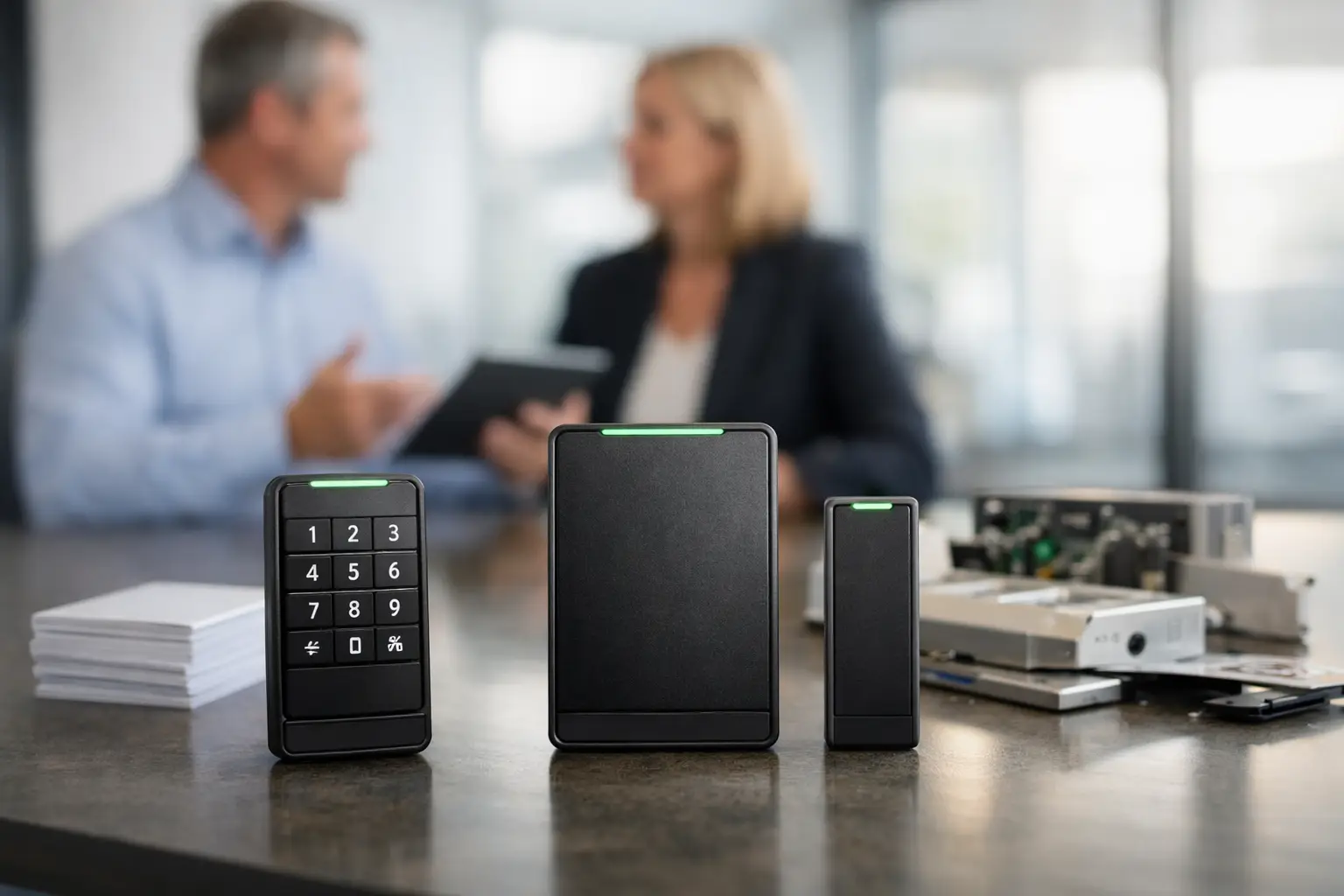
A reader shortage, the wrong wall-mount format, or an unverified credential technology can delay an access control handover even when the panel and software are already on site. Knowing how to source HID Signo readers properly means treating readers as part of a controlled project specification, not as a last-minute peripheral purchase. For Saudi commercial, government, industrial, and Vision 2030 projects, the sourcing decision must account for credential strategy and controller interface. It must also cover installation environment, compliance documentation, and traceable supply.
HID Signo readers are built for modern access control deployments that may need to support existing card populations while moving toward mobile credentials. That flexibility is valuable. It also makes exact model and configuration verification essential before releasing a purchase order.
Start With the HID Signo Reader Application
The first sourcing question is not, “Which reader is available?” It is, “What does this opening need to do?” HID Signo readers appear across office entrances, turnstiles, and server rooms. They also cover perimeter gates, elevators, parking areas, and restricted government spaces. Each application calls for a different combination of reader size, mounting method, credential support, and environmental protection.
A narrow mullion installation, for example, may require a different HID Signo form factor than a main lobby door with a standard wall-box location. A reader at a vehicle gate may need a long-range or specialized design rather than the same unit used at an internal staff door. Procurement teams should avoid substituting a specified reader with a visually similar alternative. Check physical mounting and credential requirements first.
For projects that use HID mobile credentials, confirm that the required Bluetooth Low Energy and NFC functions are part of the requested reader configuration. For card-based sites, establish whether the deployed credentials are HID Seos, iCLASS SE, MIFARE DESFire EV3, legacy proximity, or another approved technology. Compatibility is not something to assume from the HID brand name alone.
How to Source HID Signo Readers From a Defined Specification
A reliable HID Signo request should begin with a bill of materials that identifies more than quantity. It should state the exact HID model number, color or finish where relevant, mounting type, interface requirement, credential technologies, and the intended door or zone. This prevents substitutions that create problems during installation or acceptance testing.
For new access control projects, the consultant’s specification should also clarify whether the readers will communicate through Wiegand or Open Supervised Device Protocol (OSDP). OSDP is generally preferred for higher-security deployments because it supports supervised communication and, when configured appropriately, secure channel communications. However, the controller, cable plan, firmware, and commissioning method must all support the selected approach. A project using existing Wiegand infrastructure may have valid reasons to retain it, particularly during phased upgrades.
When submitting an RFQ, include these procurement details in the project documentation:
- Exact HID Signo reader part numbers and required quantities by door type
- Credential technologies required now, plus planned migration to mobile credentials or smart cards
- Wiegand or OSDP interface requirements and controller compatibility
- Indoor, outdoor, or industrial exposure conditions
- Required compliance documents, country-of-origin requirements, and tender submittals
- Delivery milestones, phased-release quantities, and site receiving location
This level of detail allows a sourcing partner to validate the request before supply rather than after products arrive at the project site.
Do Not Treat Reader and Credential Selection Separately
An HID Signo reader strategy only works when the credential strategy is equally clear. A project may install readers that support several technologies, yet still issue credentials that do not meet the client’s security or lifecycle requirements. This is especially relevant when a site is replacing legacy 125 kHz proximity cards with encrypted smart credentials or mobile access.
For a phased migration, a multi-technology HID Signo reader can reduce disruption by accepting approved existing credentials while the security team transitions users to a higher-security card format or HID mobile credentials. The trade-off is that legacy credential support may need to remain active for longer than intended. Consultants should define a retirement plan for older credentials, not simply carry them forward indefinitely.
Verify Compliance and Project Documentation Early
Government facilities, critical infrastructure, and giga-project tenders often require more than a commercial quotation. They may request NDAA or TAA compliance, manufacturer declarations, country-of-origin information, data sheets, warranty details, and traceable part numbers. Requirements differ by authority, client, and contract, so compliance requires confirmation against the exact HID Signo SKU being supplied.
Do not make a blanket compliance assumption across a complete product family. Ask for the documentation required by the tender and match it to the actual proposed model. This is particularly important where procurement teams must satisfy Vision 2030 project standards, consultant-approved vendor lists, or owner security policies.
Traceability also matters during phased delivery. Readers supplied for a pilot floor, a main construction package, and a later expansion should remain consistent with the approved submittal unless the consultant formally approves a change. Mixing variants can complicate firmware management, credential behavior, mounting accessories, and maintenance stock.
Consider the Door Hardware and Network Context
An HID Signo reader does not operate in isolation. It must be compatible with the access control panel, door controller, power supply, locking hardware, request-to-exit device, fire alarm interface, and the credential enrollment process. Sourcing teams should confirm the reader interface and electrical requirements with the system integrator before placing the order.
For networked access control architectures, identify which components require network connectivity and which are reader-to-controller connections. HID Signo readers themselves should not be confused with PoE devices simply because they are part of a connected security system. Where PoE network infrastructure is required for controllers, intercoms, or associated devices, teams can evaluate AETEK PoE switches and extenders separately as part of the broader infrastructure scope. The reader selection still needs to follow HID’s interface and power requirements.
Outdoor installations require additional attention. Saudi heat, dust, direct sun exposure, and gate-side installation conditions can affect enclosure selection, cable protection, junction-box requirements, and the suitability of the specified reader. Review the reader’s published environmental rating against the actual installation condition, not just the general facility description.
Source for Continuity, Not Just Immediate Availability
The lowest quoted line item is not always the lowest project cost. A reader sourced without part-number verification, documentation support, or a realistic delivery commitment can cause expensive delays when doors are ready for commissioning. For large projects, reserving quantities against approved schedules and defining phased supply releases is better than purchasing each batch independently.
This approach is particularly useful for multi-building developments in Riyadh, Jeddah, the Eastern Province, NEOM, and other project zones where construction packages may reach completion at different times. It gives the integrator more control over approved models and helps the procurement team plan spare quantities for critical openings.
A sensible spare-reader policy should reflect the project’s size and operational risk. High-traffic entrances, remote sites, executive areas, and security-critical doors may justify local spare stock. The goal is not to overbuy, but to avoid waiting for a replacement unit when an occupied facility needs a like-for-like reader.
Questions to Resolve Before Releasing the Purchase Order
Before approval, confirm that the HID Signo model matches the approved submittal, supports the intended credential types, and fits the mounting location. Confirm the controller interface, required accessories, delivery schedule, tender documents, and warranty process. If mobile credentials are part of the scope, verify the licensing, enrollment workflow, and client-side identity process as well.
These checks are straightforward, but they prevent the most common sourcing mistakes: ordering the wrong form factor, assuming backward compatibility, overlooking compliance requirements, or selecting a reader without a viable migration path.
Work With a Saudi HID Sourcing Partner
For system integrators, consultants, and government procurement teams, local product access is only useful when it comes with clear technical coordination. Seven Sectors supports HID access control sourcing for projects across Saudi Arabia, helping teams validate HID Signo reader requirements, obtain project documentation, and plan supply around approved schedules. The focus is on dependable product supply for professional access control deployments, not generic hardware sales.
A well-specified HID Signo order protects the project long after delivery. It gives the integrator a reader that fits the door, supports the approved credential policy, and remains manageable when the facility expands. For HID Signo reader pricing and availability, contact Seven Sectors at info@7sectors.com or submit the website’s Get Quotation form with your reader schedule and project requirements.
nnFrequently Asked Questions — Sourcing HID Signo Readers for Projects
nnSource through an authorized HID partner who can verify the correct model for each opening, confirm credential compatibility, and provide the documentation a project specification or tender requires. Seven Sectors supplies HID Signo readers to system integrators, consultants, and procurement teams across Saudi Arabia from our Jeddah base.
Yes. HID Signo readers support multi-technology credential reading — including NFC, Bluetooth Low Energy (BLE), and RFID formats such as iCLASS, MIFARE, and DESFire. This allows a facility to support existing card populations while adding mobile credential capability without replacing all readers during a migration.
HID Signo readers communicate with smartphones via Bluetooth or NFC using the HID Mobile Access platform. Users tap or present their phone to gain access without a physical card. This is increasingly specified on Saudi commercial, corporate, and Vision 2030 facilities where a contactless, auditable access experience is required.
HID Signo readers communicate using OSDP (Open Supervised Device Protocol) and Wiegand interfaces, making them compatible with a wide range of access control panel manufacturers. Seven Sectors advises on the specific controller interface required for each project and can confirm compatibility before a purchase order is placed.
Yes. Seven Sectors supplies HID Signo readers with product datasheets, compliance declarations, and partner authorization documentation suitable for Saudi project tenders and government procurement submissions. Contact us with your project scope and required documentation list.
Ready to discuss your project? Contact Seven Sectors or contact us directly on +966-012 229 3474.