
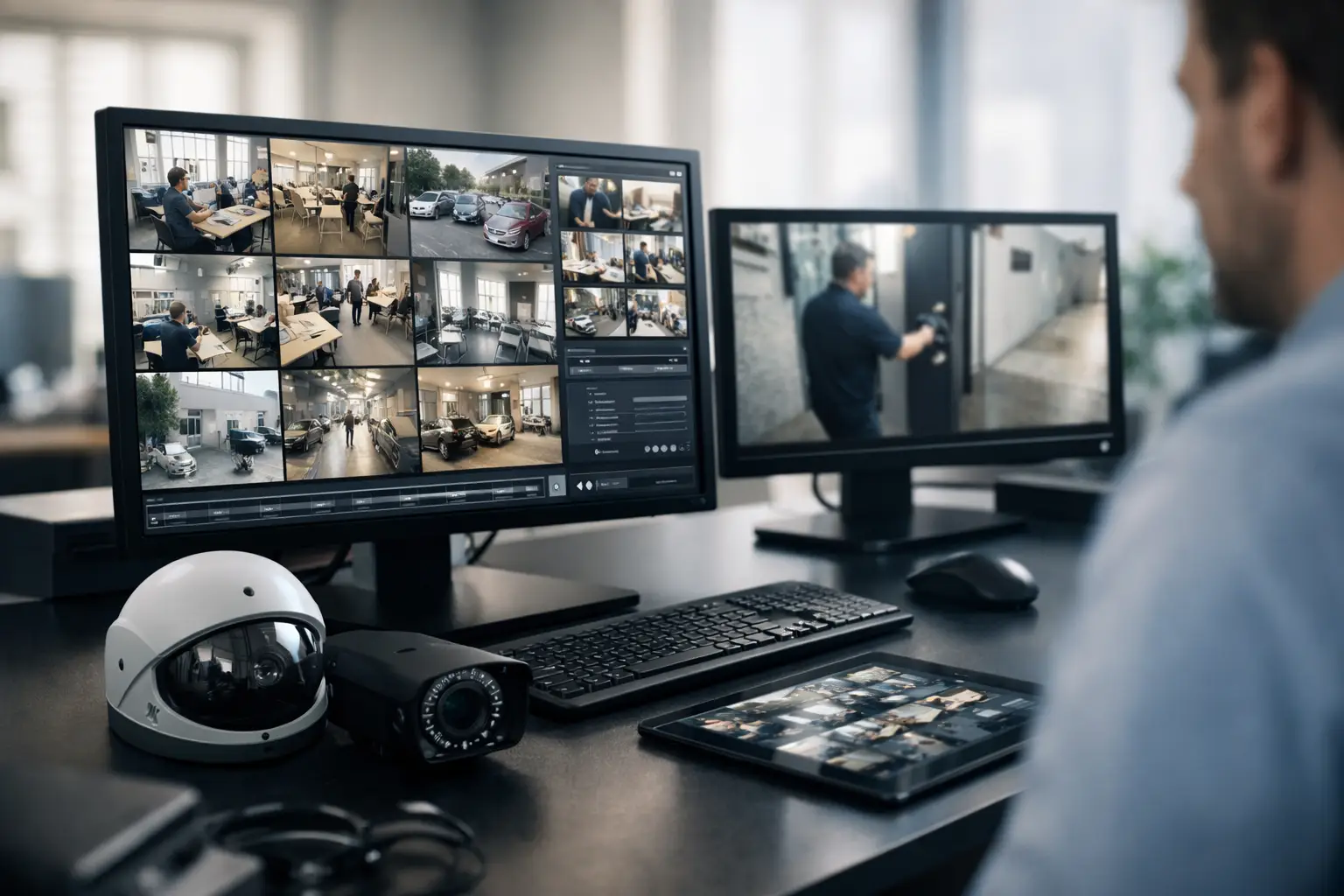
A camera project rarely fails because of the camera alone. More often, the pressure shows up later – when the customer wants faster playback, centralized monitoring, cleaner user permissions, or a simple way to manage dozens or hundreds of devices across sites. That is where the question comes in: what is video management system software, and why does it matter so much in professional surveillance deployments?
A video management system, usually called a VMS, is the software layer that connects, controls, records, organizes, and presents video from surveillance cameras. It gives operators a single environment to view live feeds, search recordings, manage users, configure recording rules, and often integrate analytics, maps, alarms, and other security systems. In practical terms, it turns a group of cameras into a usable security platform.
For integrators, consultants, and procurement teams, that distinction matters. Cameras capture images, but the VMS determines how efficiently the customer can use that video, how easily the system can scale, and how well the project performs after handover.
What is a video management system in practical terms?
At a basic level, a VMS sits between the cameras, the recording infrastructure, and the people using the system. It collects video streams from IP cameras, stores or directs recordings to the right server or storage location, and gives authorized users access through a workstation, web client, or mobile app.
In small installations, a VMS may look simple – a few cameras, one recording server, and one operator. In enterprise environments, it becomes far more strategic. A single platform may manage multiple buildings, different user roles, failover recording, event triggers, video analytics, and integration with access control or intercom systems.
That is why the answer to what is video management system cannot stop at “software for viewing cameras.” Good VMS platforms are operational tools. They shape response times, evidence retrieval, maintenance workflows, and the customer’s overall confidence in the surveillance investment.
How a VMS works inside a surveillance system
A VMS typically receives video streams from network cameras over the IP infrastructure. The software then applies the recording policy, such as continuous recording, motion-based recording, scheduled recording, or event-based recording. From there, the platform stores footage on local servers, network-attached storage, or enterprise video storage platforms, depending on the design.
The operator interacts with the system through a client interface. That interface may show live camera views, playback timelines, alarm events, health status, and camera maps. Administrators use the same platform to assign permissions, manage devices, define retention settings, and monitor system health.
Many modern VMS platforms also support third-party integrations. That can include access control events, perimeter alerts, license plate recognition, body-worn camera evidence workflows, or AI-based analytics. This is one of the main reasons professional projects move beyond standalone NVR logic and into true VMS architecture.
Core functions that make VMS software valuable
The strongest VMS platforms are not defined by one feature. Their value comes from how several functions work together in a stable, usable way.
Live monitoring and playback are the most visible functions. Operators need clear layouts, responsive switching between cameras, and fast search tools for incidents. If playback is slow or difficult to use, the customer notices immediately.
Recording management is equally important. A VMS controls when video is recorded, where it is stored, how long it is retained, and what happens if a server or network link fails. In many projects, this is where design quality directly affects compliance and evidence reliability.
User and role management matters more than many buyers expect. A commercial tower, logistics site, or government facility may need different access levels for security staff, supervisors, IT teams, and management. A proper VMS allows granular permission control rather than sharing a generic login across the whole site.
Event and alarm handling is another major advantage. Instead of asking operators to watch every screen all day, the VMS can surface events based on motion, analytics triggers, access events, or device faults. This makes the system more practical in active environments where attention must be focused.
Why VMS matters more as projects scale
A small site can sometimes function with a simple recorder-based setup. But as soon as projects expand across multiple buildings, remote branches, industrial zones, or mixed-use developments, management complexity increases quickly.
This is where VMS software starts to justify its cost. Centralized administration reduces time spent on maintenance. Standardized user policies make the system easier to govern. Better search tools reduce the time required to find incidents. Multi-site visibility gives security teams a wider operational view without forcing separate logins for every location.
For integrators, this translates into a better fit for serious customers. A professionally selected VMS can improve project value, support future expansion, and reduce post-installation friction. It also helps position the solution beyond box-level pricing, which is important when margins are under pressure.
What is video management system selection really based on?
In procurement conversations, buyers often start with channel count or license pricing. Those are valid considerations, but they should not lead the whole decision.
The right VMS depends on the project type, customer expectations, and operating environment. A warehouse with perimeter coverage and long retention requirements may prioritize recording efficiency and storage control. A hospitality site may care more about ease of use and multi-user access. A city surveillance or campus project may need federation, mapping, analytics integration, and high system resilience.
There are also technical dependencies to consider. Camera compatibility is critical, especially in mixed-brand deployments. Server requirements, bandwidth usage, cybersecurity controls, failover options, and evidence export workflows all affect whether the system will perform well in real use.
A low-cost VMS can look attractive at bid stage but create problems later if the interface is poor, integration support is limited, or future expansion becomes expensive. On the other hand, the most advanced platform is not always the best choice for every site. Overdesign adds cost and can complicate training if the end user only needs straightforward monitoring and playback.
Common deployment models and trade-offs
Most professional VMS deployments fall into a few common architectures. Some are server-based and installed on-site, which gives the customer more direct control and can suit enterprise or regulated environments. Others use distributed recording across sites with central management, which works well for organizations with multiple branches. Cloud-connected or hybrid models are also becoming more relevant, especially where remote access and simplified administration are priorities.
Each model has trade-offs. On-premise systems may offer stronger control over data location and performance, but they require proper server sizing and ongoing maintenance. Hybrid models can improve flexibility, but internet dependency and recurring costs need to be assessed carefully. Centralized architecture improves visibility, but network design becomes more important as camera counts grow.
For Saudi projects, environmental conditions, site geography, and customer IT readiness can all influence the best model. That is why teams should tie VMS planning closely to storage design, network infrastructure, and operational requirements rather than treated as an afterthought.
VMS and analytics are not the same thing
A common misunderstanding is to treat the VMS as the analytics engine itself. In reality, a VMS may include built-in analytics features, but in many professional systems it acts as the platform that receives, displays, and manages analytics events coming from cameras or dedicated software.
This distinction matters in project design. If the customer expects people counting, intrusion detection, vehicle recognition, or forensic search, the team needs to confirm where those analytics run, how they are licensed, and how they appear inside the VMS workflow. Good integration creates a practical operator experience. Poor integration creates alert noise and missed events.
The same applies to evidence management. Exporting video is one thing. Preserving chain of custody, linking incidents to cases, and managing wearable or mobile video sources is another. A VMS can support that workflow, but not every platform handles it equally well.
Questions buyers and integrators should ask early
Before committing to a VMS, it helps to ask the questions that usually surface late in the project. How many cameras will the system support now, and in three years? Will the customer need central monitoring across multiple sites? How much retention is required, and at what resolution and frame rate? Who needs access, and with what permissions?
It is also worth asking how the system will behave during failures. What happens if a recording server goes offline? Is failover included or optional? How are health alerts delivered? How easy is it to upgrade the platform without major disruption?
These are not minor technical details. They influence whether the final system feels dependable or frustrating. For a distributor and integration partner, getting these decisions right early protects both project delivery and long-term customer confidence.
Why VMS choice affects project reputation
In surveillance projects, end users remember the day-to-day experience. They remember whether footage was easy to find, whether alarms made sense, whether remote access worked, and whether the system stayed stable under load. The VMS sits at the center of all of that.
That is why VMS selection should be treated as a strategic component, not just a software line item. A well-matched platform supports stronger system performance, cleaner handover, and better customer retention. For professional security projects, that is where real value is created.
ISS SecurOS: The VMS Platform Seven Sectors Distributes in Saudi Arabia
For projects in Saudi Arabia, Seven Sectors supplies the ISS SecurOS® Video Intelligence Platform — one of the world’s most established VMS solutions. ISS (Intelligent Security Systems) has been developing video intelligence software since 1996 and currently manages over seven million cameras across 50+ countries.
The SecurOS® platform is available in editions that scale with project scope: SecurOS Professional for straightforward single-site deployments, SecurOS Premium for more demanding installations with advanced analytics requirements, and SecurOS Enterprise for large multi-site and critical infrastructure environments. For command and control applications, SecurOS MCC provides a dedicated monitoring and dispatch interface suited to government and safe city operations.
Beyond core recording and live monitoring, SecurOS integrates a full suite of AI-powered analytics modules: license plate recognition (SecurOS Auto and Motus), facial recognition (SecurOS FaceX), behavior detection including loitering and fighting detection, and labor safety compliance monitoring. These analytics modules run on the same platform, giving integrators a single environment to manage video, events, and AI outputs without requiring separate software layers.
ISS has a dedicated Middle East division and a documented track record in Saudi Arabia, including border security deployments. For integrators and consultants specifying VMS for Vision 2030 infrastructure, government facilities, or commercial projects in the Kingdom, ISS SecurOS provides the combination of enterprise-grade stability, local market presence, and deep analytics capability that serious projects require.
Seven Sectors is an authorized distributor of ISS SecurOS® in Saudi Arabia. For specifications, licensing, and project support, contact us directly.
If you are evaluating surveillance architecture for an upcoming project, the best starting point is not asking which VMS is cheapest. It is asking which platform will still serve the site properly once the camera count grows, the operators change, and the customer starts relying on the system every day.
VMS software manages IP camera streams across a network — handling live monitoring, continuous recording, video search, and playback from a centralised platform. It is the command layer that sits above cameras and storage, integrating AI analytics, access control, and alarm management into a unified security operation. Examples include ISS SecurOS, Milestone XProtect, and Genetec.
DVRs and NVRs are hardware-bound recording devices limited to a fixed camera count and basic playback. VMS is software that runs on servers and scales to thousands of cameras across multiple sites. VMS supports open standards, third-party integrations, AI analytics, and redundant server architectures that DVR/NVR systems cannot match at enterprise scale.
Modern enterprise VMS platforms support a range of AI analytics: license plate recognition (LPR), facial recognition, behaviour analysis (loitering, fighting, crowd density), perimeter detection, and object classification. ISS SecurOS integrates these as optional modules — SecurOS Auto for LPR, SecurOS FaceX for facial recognition — on the same platform as core recording and management.
Yes. Enterprise VMS platforms like ISS SecurOS SecurOS Enterprise and MCC editions are purpose-built for giga-project scale — distributed server clusters, redundant recording, and centralised command centre management. ISS has existing deployments on Saudi border security infrastructure. Seven Sectors advises integrators on SecurOS architecture for Vision 2030 projects.
The right VMS depends on camera count, site distribution, analytics requirements, integration needs (access control, PSIM), and compliance requirements. Seven Sectors is the authorized ISS partner in Saudi Arabia and provides pre-sales consultation to help integrators and consultants specify the right SecurOS edition and server architecture for each project.
Ready to discuss your project? Contact Seven Sectors or contact us directly on +966-012 229 3474.