
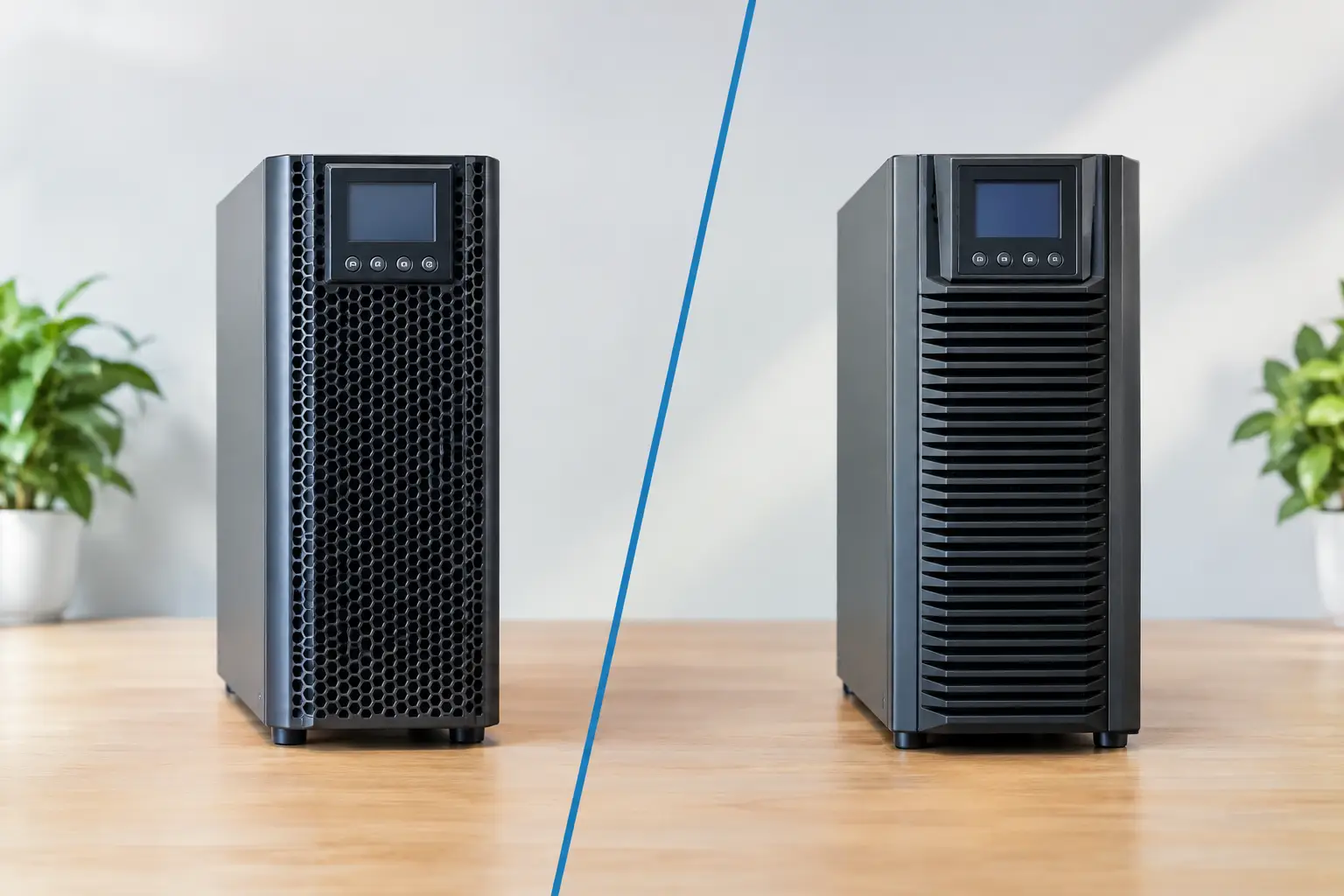
Choose the Right PoE Switch Family for the Project
AETEK C-series versus D-series is not a decision that should be made from a series letter alone. For a security integrator or consultant, the correct choice comes down to the exact switch model, the powered devices it must support, the network topology, and the conditions at the installation point. AETEK provides PoE switching and network infrastructure for projects where power delivery and data transport need to be specified together.
The wrong comparison starts with a generic question such as, “Which series is better?” The useful question is, “Which listed model gives this site the required ports, PoE budget, uplinks, management functions, and mounting arrangement without creating an unnecessary cost or integration risk?” That distinction matters on commercial buildings, government facilities, industrial sites, and distributed surveillance networks.
Start with the bill of materials, not the series name
C-Series and D-Series are family identifiers. They do not replace a model-by-model review. Within either family, the available port count, copper and fiber connectivity, PoE capability, environmental suitability, and management options can differ. Procurement teams should therefore avoid writing a specification that accepts a series name without defining the operational requirement behind it.
A clear request for quotation should identify the end devices, their expected power draw, network connection type, cabinet or field enclosure location, and upstream network handoff. That allows the proposed AETEK model to be checked against the actual design intent rather than treated as a like-for-like substitution based only on its family label.
This is particularly relevant when a tender includes multiple locations. A compact communications room switch, a cabinet serving cameras and access control panels, and a field-side switch positioned closer to perimeter equipment may all have different requirements. Selecting one family for every position can simplify purchasing, but it may also force the project into excess capacity in one area and a shortfall in another.
Compare power requirements before port counts
Port count is visible on every schedule. Power demand is where many PoE decisions become difficult.
A switch may have enough ports for every endpoint while still being unsuitable once the combined power requirement is calculated. The evaluation should account for the real operating demand of connected devices, any anticipated peak behavior, and a sensible allowance for future additions. This is not limited to surveillance endpoints. Access control devices, intercom equipment, wireless infrastructure, and other networked field devices can affect the power plan when they share the same switching layer.
Build a realistic power schedule
Ask the system designer or endpoint supplier for the required power class of each device and record how many will connect to each switch. Then check the selected AETEK model’s documented PoE budget rather than assuming that a per-port rating can be delivered across every active port at once.
This protects the project from a common late-stage problem: all devices start successfully during testing, but the network behaves unpredictably after additional loads are connected or when devices enter higher-demand operating modes. A properly matched switch leaves a defined operating margin and makes future maintenance easier.
Where C-Series and D-Series options both meet the port requirement, the model with the more appropriate confirmed PoE budget is usually the stronger choice. The series itself is secondary.
Match uplinks to the network topology
The next decision is how each access switch connects to the wider network. This often separates a suitable selection from an expensive correction after installation.
For a short copper connection back to a nearby communications room, the required uplink arrangement may be straightforward. For larger compounds, separate buildings, roadside equipment, parking areas, utility zones, or long campus routes, fiber connectivity and the available uplink interfaces need early confirmation. The switch cannot be assessed independently of the route, termination hardware, and aggregation equipment.
A consultant should also consider the traffic path, not only the physical medium. Multiple high-traffic endpoints feeding a single uplink can create a bottleneck even if power delivery is correctly sized. Determine what traffic will converge at each switch, where recording or server infrastructure sits, and whether the network design calls for redundancy or ring operation. Any required feature should be confirmed against the exact AETEK model and software documentation.
For tender documents, it is better to state the expected uplink medium, quantity, speed, and resilience requirement than to simply request a “managed PoE switch.” That wording gives contractors and procurement teams a measurable basis for comparing C-Series and D-Series options.
Decide how much management the site actually needs
Management capability should support the operating model of the site. It should not be included merely because it appears in a product comparison table.
A small, isolated group of endpoints may need only a straightforward switching arrangement and clear local fault isolation. A multi-building security system, however, may require network teams to monitor device status, segment traffic, apply policies, review event information, and diagnose faults without visiting every cabinet. In these environments, the management functions available on the proposed model become a central procurement point.
The relevant questions are practical. Who will support the network after handover? Does the project require segmentation between security systems and other operational networks? Will the switch sit in a location that is hard to access? Are remote alerts or centralized administration part of the employer’s requirements?
If the answer is yes, request a model-level confirmation of the required management functions. Do not assume that every C-Series or D-Series switch carries the same software capabilities. A precise model reference protects the consultant’s specification and gives the integrator a clearer basis for commissioning work.
Consider the physical installation environment
Switch selection is also an installation decision, even when the switch is technically adequate on paper. Cabinet space, available power input, ventilation, rail or rack arrangement, connector access, and cable routing can determine whether a proposed model is practical.
For indoor communications rooms, the selection may prioritize density, orderly patching, and connection to the core network. For cabinets closer to operational equipment, the conditions may call for a different physical format and closer attention to the local power source and enclosure design. Industrial and outdoor-adjacent locations demand the same disciplined check against the exact model’s published installation requirements.
This is where a series-level comparison can be misleading. A C-Series option may be appropriate for one cabinet layout while a D-Series option is a better fit elsewhere, or the reverse may be true. The correct answer depends on the model dimensions, approved mounting method, power input requirements, and documented operating conditions.
Use a model-level comparison sheet
Before approving either family, create a short comparison sheet for the specific candidate models. It should cover at least these project decisions:
- Number and type of endpoint ports required now and at planned expansion
- Total PoE demand, including a defined operating margin
- Uplink interfaces and the path back to aggregation or core switching
- Required network management and security functions
- Installation location, mounting arrangement, local power, and environmental conditions
- Documentation required by the tender, consultant, or government procurement process
This approach prevents a series comparison from becoming a guessing exercise. It also makes technical clarifications easier when the project team changes endpoint quantities, adds an equipment room, or requests a different uplink route.
When C-Series is the right answer, and when D-Series is
Choose the C-Series candidate when its exact model aligns with the project’s power, uplink, management, and installation requirements at the required quantity. Choose the D-Series candidate when it provides the stronger documented fit for those same requirements. Neither family should be treated as the automatic upgrade or the default value option without reviewing the specific model.
For mixed-use developments and large security packages, a combined approach may be appropriate. Different switch models can be allocated to different network layers or physical zones, provided the design team confirms compatibility, support requirements, and standardization objectives. Standardizing too aggressively can increase material cost; varying models without a clear schedule can make spares and maintenance harder. The best balance is usually a limited, well-documented set of approved models.
Seven Sectors Trading Co. can support integrators, consultants, and procurement teams with AETEK model selection information, availability checks, and quotation support for Saudi Arabian projects. Send the endpoint schedule, network topology, required uplinks, and installation details to info@7sectors.com or submit a Get Quotation request.
The most dependable switch decision is rarely the one with the most familiar series name. It is the one that leaves the project team with documented power headroom, an appropriate network path, and a model that fits the cabinet where it will actually operate.
Ready to discuss your project? Contact Seven Sectors or contact us directly on +966-012 229 3474.