
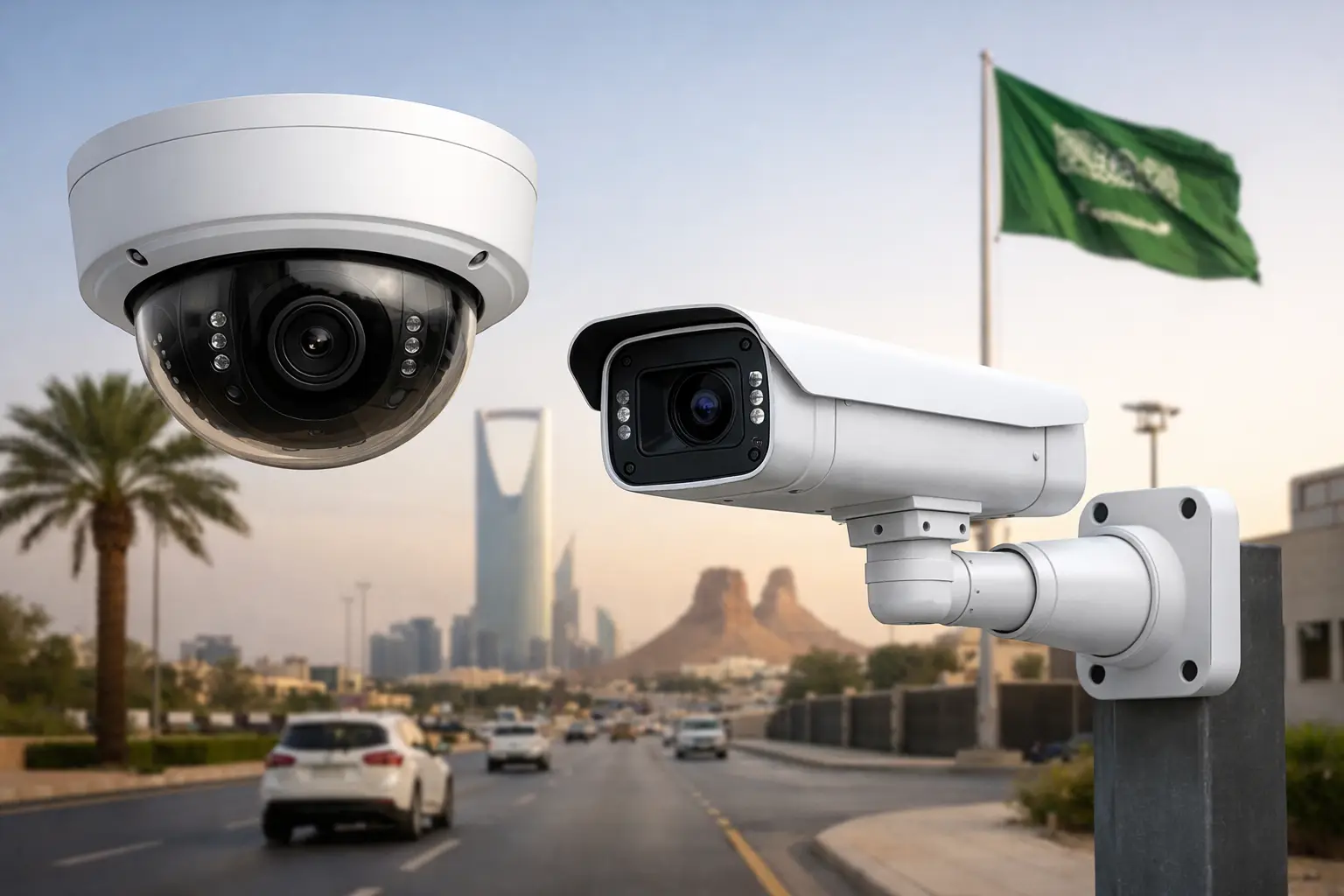
A license plate recognition camera can look excellent in a daytime demonstration and still fail at the one moment that matters: a vehicle entering a compound at night, at an angle, with headlights facing the lens. For system integrators and procurement teams, selecting the best Milesight LPR cameras is therefore not a simple megapixel comparison. It is a site-specific decision involving vehicle speed, lane geometry, lighting, country plate formats, network capacity, and the VMS or access-control workflow behind the camera.
Milesight LPR technology is particularly relevant to Saudi projects where vehicle movement is a security and operational event: government facilities, industrial gates, logistics yards, staff parking, commercial towers, ports, campuses, and Vision 2030 infrastructure sites. The Milesight LPR Pro Bullet Plus Camera is the natural starting point when the brief requires a dedicated fixed LPR device rather than a general-purpose CCTV camera expected to perform plate reading as an added function.
What Makes the Best Milesight LPR Cameras Different
The best choice is rarely the camera with the longest feature list. It is the camera that can consistently create usable plate data at the defined capture point. A project team should begin with the required outcome: open a barrier for authorized vehicles, create a searchable vehicle record, alert control room operators to watchlist matches, or investigate an incident after the fact. Each outcome places different demands on capture accuracy, analytics configuration, retention, and integration.
A dedicated Milesight LPR Pro Bullet Plus Camera is suited to controlled entry and exit lanes because its deployment can be engineered around a known vehicle path. This is fundamentally different from attempting to read plates across several lanes of uncontrolled roadway traffic. The latter may require separate capture zones, carefully selected optics, and more than one camera position.
Milesight AI cameras also bring value outside the LPR lane. A wider scene camera can provide contextual video of the driver, vehicle color, direction of travel, and surrounding activity, while the dedicated LPR camera captures the plate. This two-camera approach is often the more defensible design for a critical gate, especially where security operators must verify an event rather than rely on a plate record alone.
Best Milesight LPR Cameras by Deployment Scenario
Controlled gates and barrier lanes
For a single controlled lane at a corporate site, warehouse, government facility, or gated industrial compound, the Milesight LPR Pro Bullet Plus Camera should be evaluated first. The goal is repeatable recognition at a predetermined point before the vehicle reaches the barrier. Camera mounting height, horizontal angle, focal length, and trigger or analytics zone should be set around that one capture area.
This is also the right environment to connect LPR results to access-control logic. A plate match may authorize a barrier action, but high-security sites should consider an additional credential, guard verification, or HID access-control event rather than treating a number plate as the sole identity factor. Plates can be obscured, misread, duplicated, or associated with a vehicle rather than a specific authorized person.
Parking facilities and commercial developments
Parking deployments usually need more than barrier opening. Operators may require entry and exit records, vehicle dwell time, exception reporting, and incident search. Here, the best Milesight LPR camera selection depends on how disciplined the lane layout is. A well-marked, low-speed entry can support a focused LPR design. A busy mixed-use parking ramp with vehicles queuing, changing lanes, and turning sharply may need multiple capture points and a separate overview camera.
Low-light performance matters in basement parking and shaded entrances. Milesight specifies capabilities including 0.002 Lux low-light performance and up to 140 dB WDR within its AI camera portfolio, but procurement teams should validate the exact LPR Pro Bullet Plus configuration, lens option, and operating conditions against the current datasheet. Specifications are useful, but headlight glare, reflective Saudi plates, wall finishes, and vehicle approach angles remain real commissioning variables for the appointed integrator.
Perimeter roads, logistics yards, and industrial sites
A logistics site may need plate recognition at truck gates, staff entrances, weighbridges, loading zones, and perimeter checkpoints. These are not identical use cases. Trucks have higher plates, different stopping behavior, and wider turning arcs than passenger vehicles. A single camera position that works for sedans can miss a truck plate or capture it at an unfavorable angle.
For yards and perimeter roads, use Milesight LPR cameras where vehicles slow or stop naturally. If the operational requirement is recognition of faster traffic across several lanes, the project should be treated as a specialized roadway LPR design, not a standard gate-camera deployment. Accurate site drawings, lane measurements, vehicle-speed assumptions, and representative day and night test conditions should be part of the technical submittal.
The Four Questions to Answer Before Specifying Milesight LPR
First, define the plate types the system must read. Saudi Arabia has its own plate layout and bilingual characters, while airports, ports, diplomatic areas, and major commercial sites may see vehicles from across the GCC. Confirm that the proposed LPR configuration supports the required plate formats and whether Arabic and English character handling is needed within the workflow.
Second, define speed and distance honestly. LPR performance is affected by motion blur, plate pixel density, focal length, and shutter settings. If a vehicle will pass the capture point at 10 km/h, that is a different design from a vehicle moving at 50 km/h. A camera can only deliver reliable evidence when the scene is designed around its practical capture envelope.
Third, assess light from the vehicle’s perspective. In Saudi Arabia, harsh daylight, low-angle sun, dust, reflective surfaces, covered entrances, and nighttime headlight glare can all affect capture quality. Wide dynamic range is valuable where bright headlights and dark backgrounds occur together, but it does not replace correct camera alignment and exposure configuration.
Fourth, specify where the data goes. Some projects only need searchable video metadata. Others require an alerting engine, a central command center, or integration with barriers and access control. ISS SecurOS can be considered where the project requires enterprise VMS capabilities, LPR workflows, and centralized management across multiple sites. The camera, VMS, storage, and event-response process should be considered as one chain, not as separate procurement packages.
Network and Storage Considerations That Affect LPR Results
LPR cameras are edge devices, but their value depends on reliable network transport and recorded video. AETEK is relevant here as a PoE infrastructure brand, not a camera brand. For outdoor gate locations, AETEK H-series IP67 PoE switches can support protected field connectivity, while AETEK PoE extenders can address runs up to 250 meters where a conventional copper segment is insufficient. The selected switch must be sized for the camera’s actual PoE requirement, environmental conditions, uplink capacity, and any associated overview camera or intercom.
Storage planning should retain both the LPR event metadata and the associated video evidence. A text record alone may not settle a dispute about lane direction, tailgating, or a partly obscured plate. For larger government, industrial, or smart-city environments, Rasilient NFD storage and surveillance servers can be evaluated where uninterrupted recording performance is a priority, while Dell PowerEdge and PowerVault infrastructure may suit projects that standardize on Dell for VMS compute and storage. The final platform choice depends on retention days, camera count, VMS architecture, cybersecurity requirements, and procurement standards.
NDAA Compliance and Tender Documentation
Milesight is an NDAA-compliant camera brand, making it relevant for projects where compliant supply chains and documented product origin are procurement requirements. For government tenders and Vision 2030 developments, compliance should be handled as a documentation process, not a marketing checkbox. The consultant or procurement team should request current declarations, exact model references, country-of-origin information where required, warranty terms, and compatibility confirmation for the proposed VMS and network architecture.
NDAA compliance does not automatically mean every component in a project is TAA-compliant. Where TAA compliance is specifically required, verify it at the exact product and component level. Seven Sectors can help project teams source Milesight cameras alongside NDAA/TAA-compliant AETEK PoE infrastructure where the tender specification requires a compliant end-to-end field solution.
A Better Way to Compare Milesight LPR Options
Do not ask only, “Which is the best camera?” Ask which camera is best for the lane, plate type, speed, light, and workflow. A dedicated Milesight LPR Pro Bullet Plus Camera is generally the strongest fit for a controlled vehicle capture point. Pair it with an appropriate Milesight AI overview camera when the security team needs complete visual context, and build the supporting network and recording layer to the same standard as the camera.
For Saudi projects, the practical next step is to provide a lane drawing, mounting assumptions, expected vehicle types, approximate speeds, operating hours, and required integrations before product selection is finalized. This gives the appointed system integrator and consultant a proper basis for specifying a solution that will perform beyond a product demonstration.
For pricing, availability, and technical sourcing support for Milesight LPR cameras, contact Seven Sectors at info@7sectors.com or submit the website Get Quotation form.
Frequently Asked Questions
What are the best Milesight LPR cameras for Saudi gated communities and industrial gates?
The Milesight LPR series, including dedicated LPR models with IR illumination and motorised varifocal lenses, are engineered for gate, compound, and lane-entry applications. For Saudi sites with high daytime heat and mixed lighting, specify models with WDR (Wide Dynamic Range) and IR night vision to capture plates at entry and exit regardless of headlamp glare. Contact Seven Sectors to select the right model for your lane count and vehicle speed.
Is Milesight LPR NDAA-compliant for government projects in Saudi Arabia?
Yes. Milesight cameras, including LPR-specific models, are NDAA Section 889-compliant, meaning they are not manufactured by entities prohibited under U.S. federal procurement law. This makes them suitable for Vision 2030 developments, government facilities, and projects with internationally aligned procurement requirements. Seven Sectors can supply compliance documentation on request.
How does Milesight LPR integrate with access control and VMS platforms?
Milesight LPR cameras output plate reads via ONVIF, HTTP API, and direct integration with supported access control platforms. They work with ISS SecurOS Auto/Motus for enterprise LPR analytics and with most major access control systems for barrier automation. For site-specific integration requirements, Seven Sectors can advise on the correct camera model and VMS pairing.
What is the maximum recognition distance for Milesight LPR cameras?
Recognition distance depends on the specific model, lens selection, lane width, and plate size. Milesight LPR models are typically rated for lane entry and exit distances practical for Saudi standard vehicle lanes. Longer-range models with motorised zoom are available for multi-lane or open-road applications. Seven Sectors can provide model-specific datasheets and recommend configurations based on site geometry.
How much does a Milesight LPR camera cost in Saudi Arabia?
Pricing depends on the model, quantity, project scope, and integration requirements. Seven Sectors supplies Milesight LPR cameras to system integrators and consultants across Saudi Arabia. Contact us for a project-specific quotation.
Ready to discuss your project? Contact Seven Sectors or contact us directly on +966-012 229 3474.