
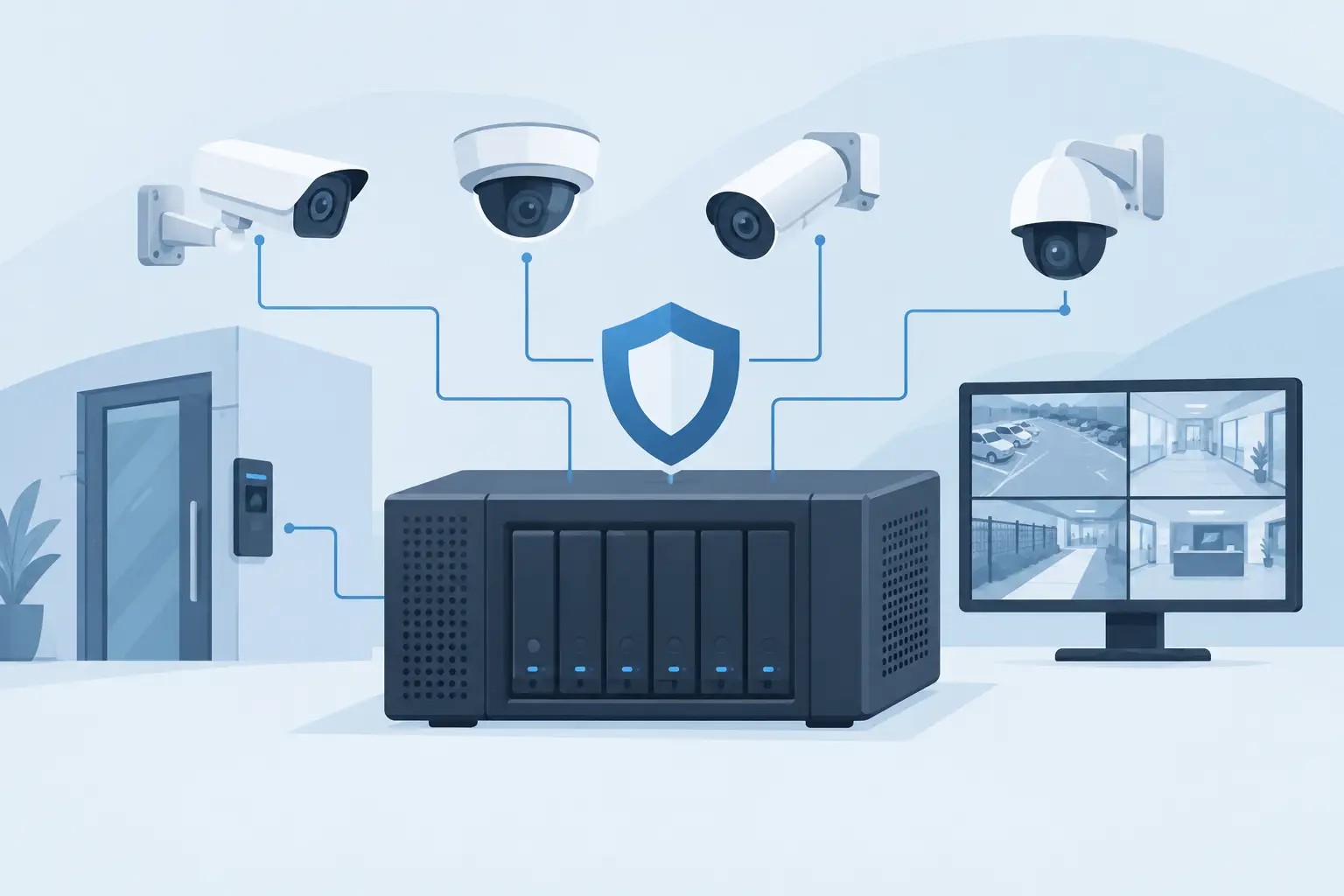
A surveillance system can have the right cameras, coverage, and network capacity yet still fail its most basic purpose if recorded video is unavailable when an incident occurs. Selecting a Rasilient storage server for NVR environments is therefore not simply a capacity purchase. It is a decision about evidence retention, system availability, serviceability, and the ability to expand without disrupting security operations. Rasilient is available through Seven Sectors Trading Co. as an authorized partner for Saudi security projects that require dependable surveillance storage.
For system integrators, consultants, and procurement teams, the key question is not “How many terabytes are needed?” It is whether the proposed storage architecture will reliably preserve usable video at the required quality and retention period under real operating conditions.
Start With the Recording Requirement, Not the Drive Count
Storage sizing should begin with the recording policy defined for the project. Camera count alone is not enough. The actual load depends on the selected stream settings, including resolution, frame rate, compression method, scene activity, recording schedule, and whether cameras record continuously or on events.
A site recording continuously at high image quality creates a very different storage load from a site that uses scheduled recording and event-based rules. Analytics can also affect the recording plan. A camera may generate lower storage demand when recording only events, but the project team must confirm that the event logic captures the activity that matters. A missed trigger is not solved by adding more storage.
Retention requirements also need to be stated clearly. Procurement documents may refer to a number of days, but the requirement should establish whether that period applies to all cameras, selected critical cameras, or only to normal operating conditions. It should also account for temporary growth during investigations, increased activity, or additional cameras added after handover.
The right approach is to document the input assumptions before selecting the server. This gives the consultant, integrator, and procurement team a clear basis for reviewing the proposed solution and avoiding capacity gaps caused by assumptions that were never approved.
What a Rasilient Storage Server for NVR Deployment Must Handle
An NVR environment creates a write-intensive workload. Cameras are continuously sending video streams, while operators may simultaneously search archives, export clips, view live video, or review multiple playback streams. A storage platform must manage these actions without allowing routine user activity to undermine recording continuity.
That is why surveillance storage should be assessed as an operating system component, not as general-purpose file storage. The server must suit the expected ingest rate, the number of concurrent users, the VMS or NVR workflow, and the planned retention policy. It also needs sufficient room for sensible expansion where future camera additions are likely.
Rasilient storage solutions are relevant when the project requires a purpose-built surveillance storage platform rather than an improvised collection of drives. The evaluation should focus on how the server supports sustained video recording, operational continuity, and manageable recovery procedures. The correct configuration depends on the project, so the selected platform should be reviewed against the approved camera schedule and recording rules rather than selected from capacity alone.
Compatibility is equally important. Confirm how the storage server will work with the chosen NVR or VMS platform, the recording server architecture, the network topology, and the operator workstation requirements. A storage server can be correctly sized on paper but still perform poorly if the broader system has bottlenecks in network uplinks, recording services, or client playback paths.
Resilience Means More Than RAID
Drive protection is necessary, but it is only one part of resilience. RAID or other disk-protection methods can help a system continue operating after a drive failure, depending on the architecture. They do not replace a recovery plan, and they do not protect against every operational risk.
A serious surveillance storage review should address power protection, hardware health monitoring, replacement procedures, alert handling, and the process for restoring service after a failure. It should also define who receives system alarms and what action is expected when capacity thresholds, disk alerts, or recording faults are identified.
For critical facilities, teams should consider what happens during a recording server outage, a storage controller issue, a network interruption, or a failed drive awaiting replacement. The answer may vary by risk level. A commercial facility may accept a different recovery posture than a government, industrial, transport, or critical-infrastructure environment.
Retention must also be protected operationally. When storage reaches capacity, the system’s overwrite behavior must align with the approved retention policy. If critical evidence is under investigation, operators need a defined process for preserving exports or protected recordings before normal retention rules overwrite them. Storage capacity does not replace evidence-management discipline.
Plan Capacity for Growth and Investigation Workflows
Most surveillance systems grow after the initial deployment. New entrances are covered, operational areas are reconfigured, or a client adds cameras after reviewing early footage. A server sized exactly for day-one recording leaves little room for these normal changes.
Growth planning does not mean oversizing without discipline. It means identifying realistic expansion triggers and choosing a platform that can accommodate the project roadmap. The project team should consider additional cameras, higher-quality streams, longer retention requirements, increased concurrent playback, and any future requirement to retain selected footage separately.
Investigation workflows deserve particular attention. Security operators may need to search several cameras around one incident, review recordings across multiple time periods, and export evidence while recordings continue. This activity can place pressure on storage and network resources. A design that performs adequately during quiet periods may be less satisfactory when operators need it most.
For this reason, acceptance criteria should include more than a capacity figure. Teams should define expected recording continuity, playback behavior, search responsiveness, health monitoring, and alert visibility. These requirements make procurement comparisons more meaningful because they evaluate the working surveillance environment, not just the hardware inventory.
Questions to Settle Before Procurement
Before issuing a request for quotation, confirm the camera quantity and anticipated growth, approved recording settings, retention period, recording mode, expected concurrent users, and the NVR or VMS platform. Also identify whether footage from certain cameras requires different retention or access controls.
The project should clarify the physical environment for the server, including rack space, power availability, cooling, and network connectivity. These details affect the overall supply requirement and prevent last-minute changes during deployment.
It is also useful to agree on the support path. Hardware is only one part of long-term operability. The integrator should know how health information will be reviewed, who will act on fault alerts, and how replacement components will be handled under the project’s maintenance arrangements.
FAQ
Is an NVR itself enough for large surveillance retention requirements?
It depends on the camera count, recording policy, and operator workload. Smaller systems may use an NVR-centric approach, while larger or more demanding environments often require dedicated server and storage architecture to support retention, performance, and future growth.
Can RAID be treated as a backup for surveillance video?
No. RAID helps address certain drive-failure scenarios, but it is not a backup strategy and does not eliminate the need for documented recovery, evidence preservation, and maintenance procedures.
When should storage capacity be reviewed?
Review it whenever cameras are added, recording settings change, retention periods increase, or operators report slow playback or recurring storage alerts. Waiting until the server is full turns a manageable planning task into an operational risk.
A well-specified storage platform gives the security team confidence that recorded video will remain available when it is needed, not merely when the system is lightly loaded. For a Rasilient storage server aligned to your NVR or VMS requirements, contact Seven Sectors Trading Co. at info@7sectors.com or submit a Get Quotation request with the camera schedule, retention target, and recording assumptions.
Ready to discuss your project? Contact Seven Sectors or contact us directly on +966-012 229 3474.